2026
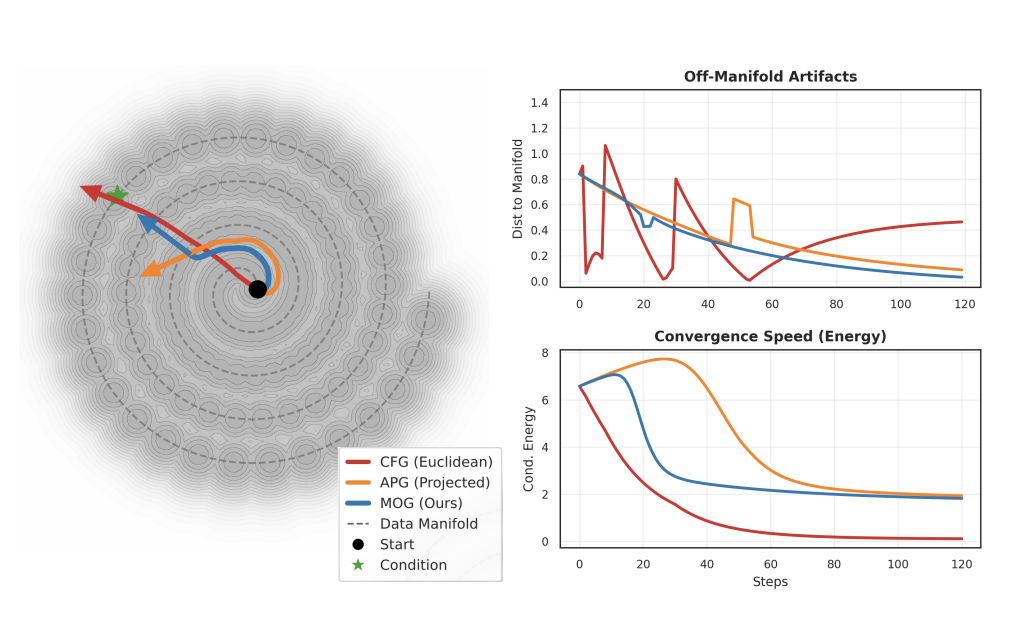
Manifold-Optimal Guidance: A Unified Riemannian Control View of Diffusion Guidance
Zexi Jia, Pengcheng Luo, Zhengyao Fang, Jinchao Zhang*, Jie Zhou
International Conference on Machine Learning (ICML) 2026 Under review
We reinterpret classifier-free guidance as a geometric mismatch: Euclidean CFG pushes samples off the data manifold. MOG formulates guidance as a local optimal control problem and applies a closed-form Riemannian correction (with an Auto-MOG schedule) to reduce artifacts at high guidance without retraining.
From Clusters to Generators: Cycle-Consistent Unsupervised Concept Learning
Zexi Jia, Jinchao Zhang, Jie Zhou
European Conference on Computer Vision (ECCV) 2026 Under review
We propose a cycle-consistent framework for unsupervised concept learning that bridges clustering-based discovery with generative models. By enforcing a cycle consistency between concept extraction and generation, our method learns interpretable visual concepts without manual supervision.
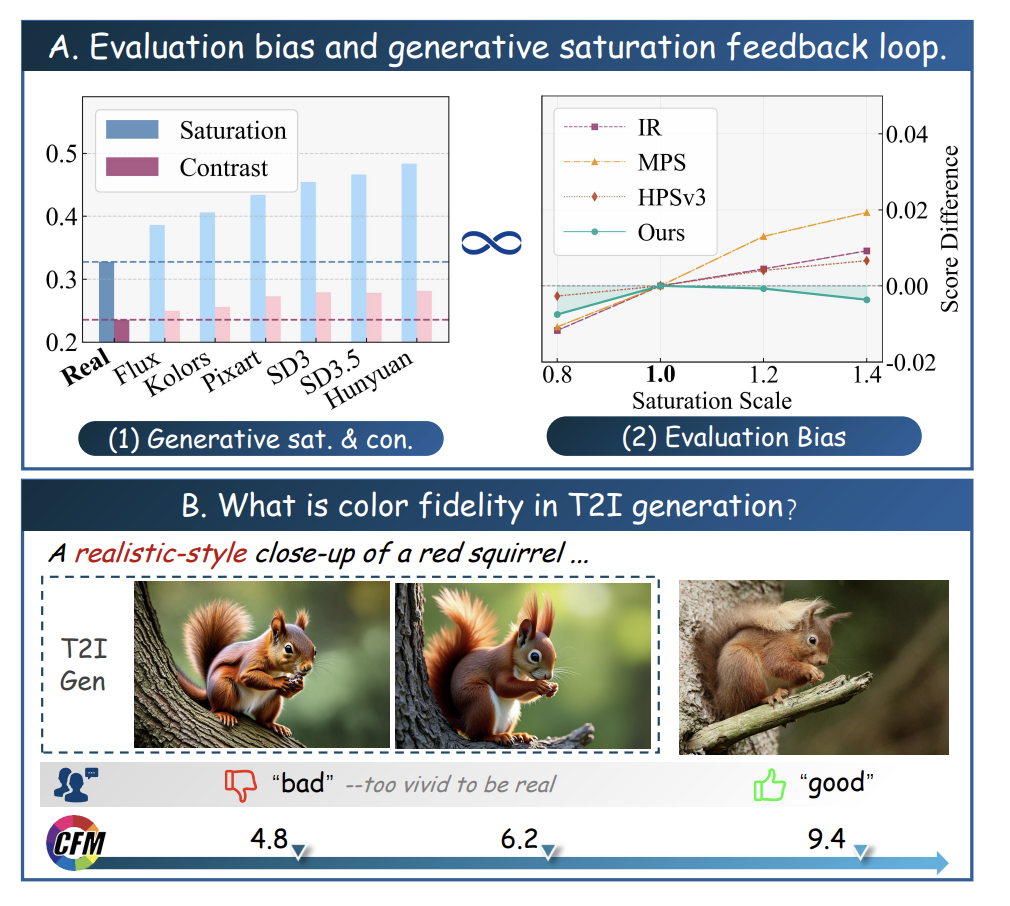
Too Vivid to Be Real? Benchmarking and Calibrating Generative Color Fidelity
Zhengyao Fang, Zexi Jia*, Yijia Zhong, Pengcheng Luo, Jinchao Zhang, Guangming Lu, Jun Yu, Wenjie Pei
IEEE/CVF Conference on Computer Vision and Pattern Recognition (CVPR) 2026 Highlight
Text-to-image models often produce oversaturated “too vivid” outputs when asked for realistic photos. We introduce a color fidelity dataset (CFD), a learned color fidelity metric (CFM), and a training-free refinement (CFR) that calibrates guidance to improve photographic color authenticity.
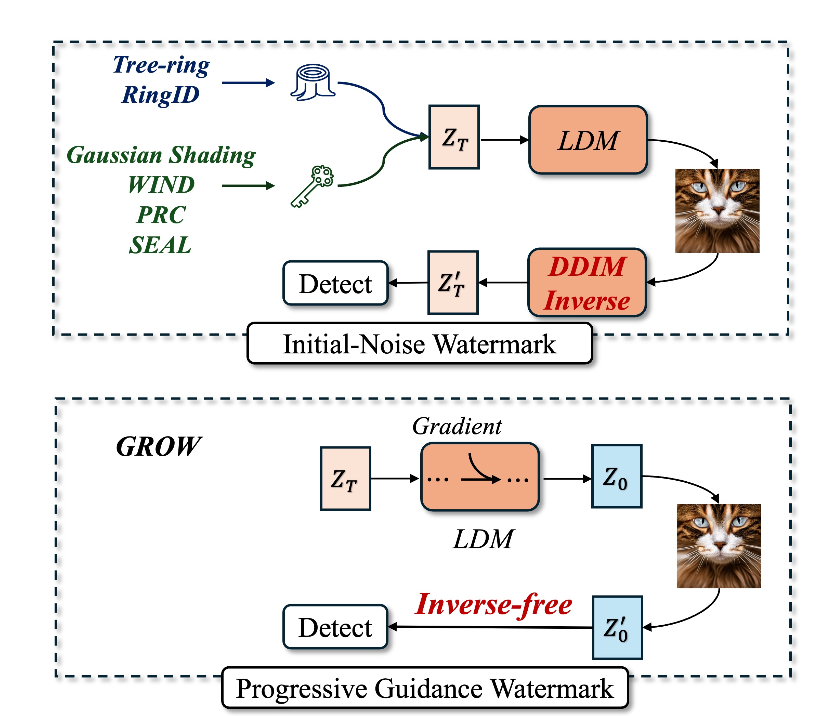
GROW: Watermark Generation with Progressive Guidance for Diffusion Models
Pengcheng Luo, Zexi Jia*, Yijia Zhong, Jinchao Zhang, Jie Zhou
IEEE/CVF Conference on Computer Vision and Pattern Recognition (CVPR) 2026
We propose GROW, a training-free diffusion watermarking method that grows the mark across denoising steps via frequency-domain loss and gradient guidance, instead of one-shot embedding in initial noise. Extraction needs no DDIM inversion, so verification is roughly 100x faster than inversion-based baselines while keeping strong imperceptibility and robustness.
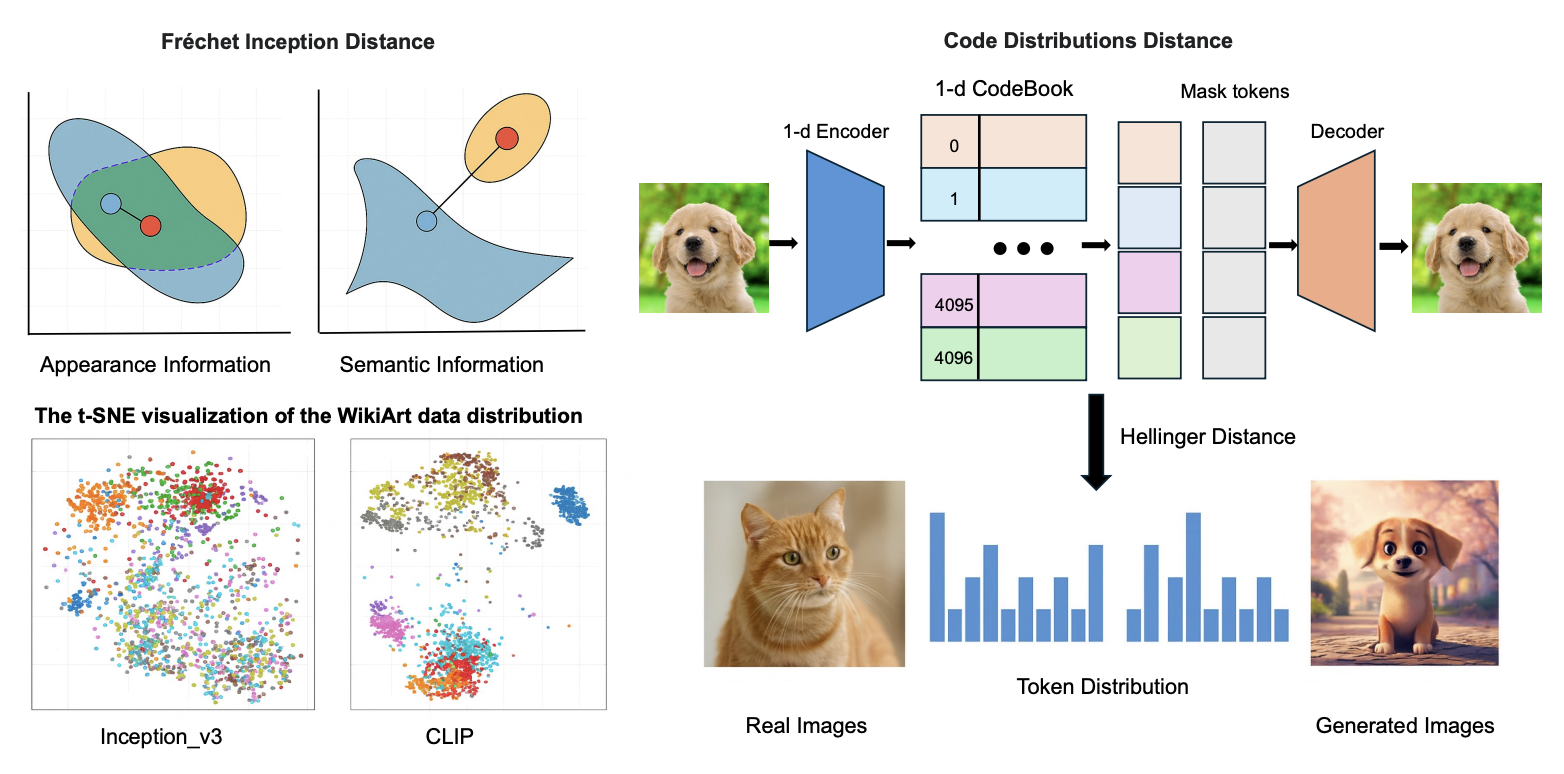
Evaluating Generative Models via One-Dimensional Code Distributions
Zexi Jia, Pengcheng Luo, Yijia Zhong, Jinchao Zhang, Jie Zhou
IEEE/CVF Conference on Computer Vision and Pattern Recognition (CVPR) 2026 Highlight
We propose evaluation metrics based on one-dimensional distributions of discrete visual codes, including CHD and CMMS, which achieve strong correlation with human perceptual preferences when comparing and ranking generative models.
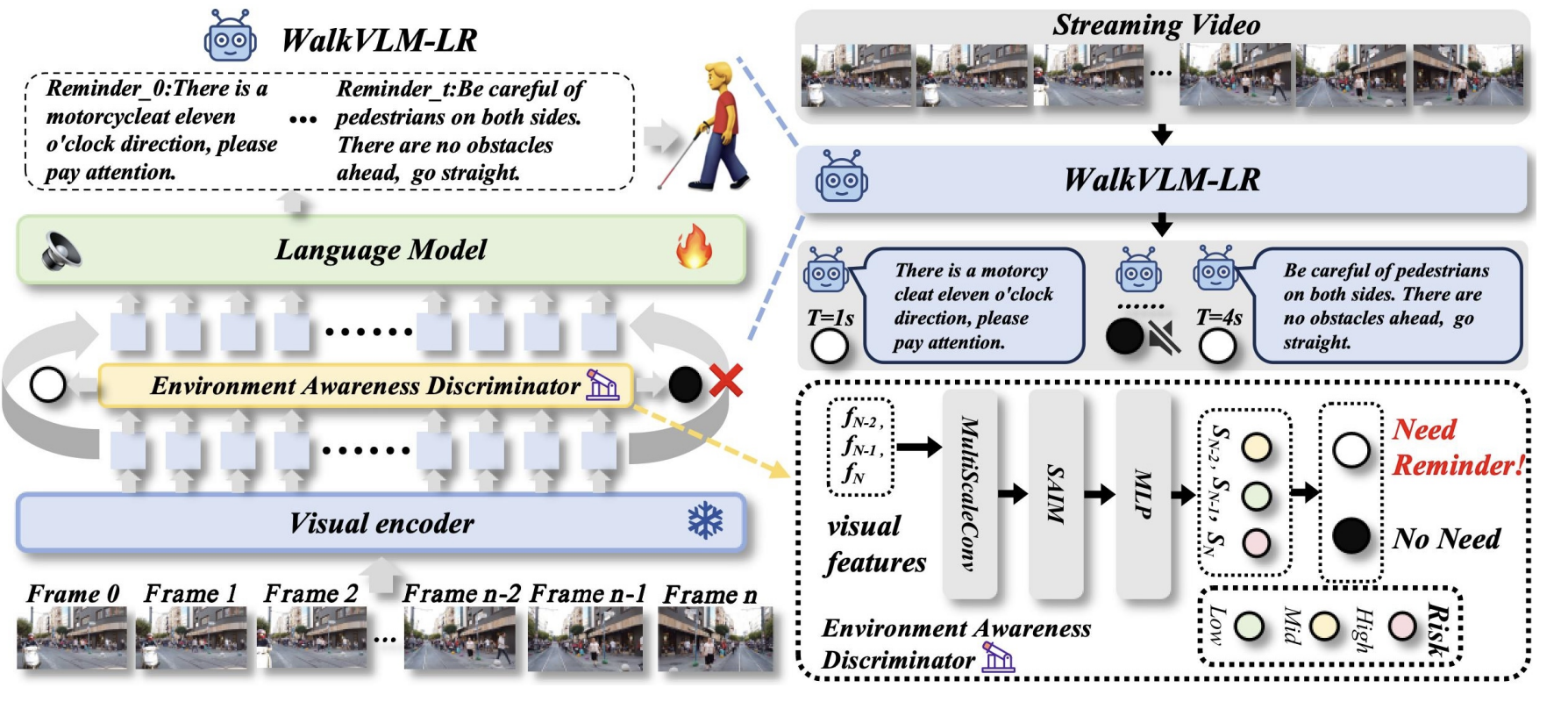
Less Redundancy: Boosting Practicality of Vision Language Model in Walking Assistants
Chongyang Li, Zhiqiang Yuan, Hanbo Bi, Zexi Jia, Jinchao Zhang*
IEEE International Conference on Acoustics, Speech and Signal Processing (ICASSP) 2026
We reduce verbose outputs and redundant reminders in VLM-based walking assistants via GRPO-style preference optimization and an environment-awareness module, improving conciseness and temporal efficiency for visually impaired users.
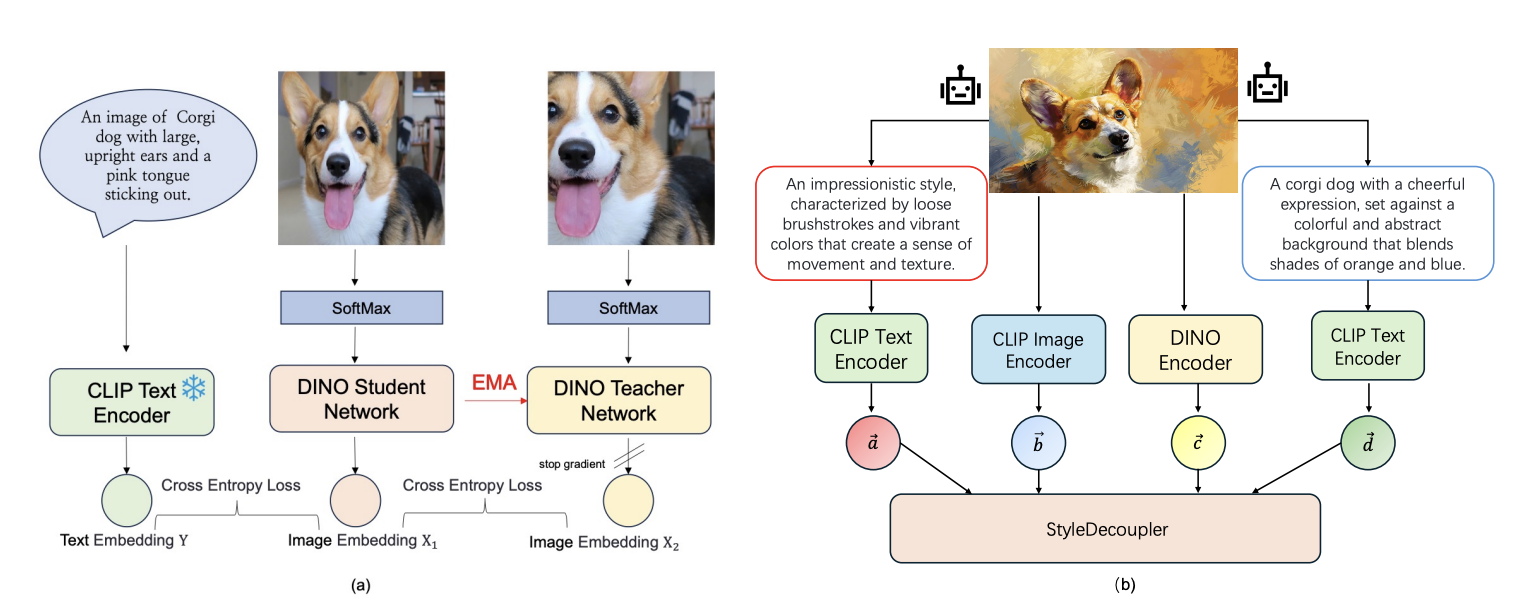
StyleDecoupler: Generalizable Artistic Style Disentangle
Zexi Jia, Jinchao Zhang, Jie Zhou
IEEE International Conference on Acoustics, Speech and Signal Processing (ICASSP) 2026
An information-theoretic framework that separates artistic style from semantic content by contrasting multi-modal (e.g., CLIP) and uni-modal (e.g., DINOv2) representations, with a large-scale WeART benchmark for style retrieval and evaluation.
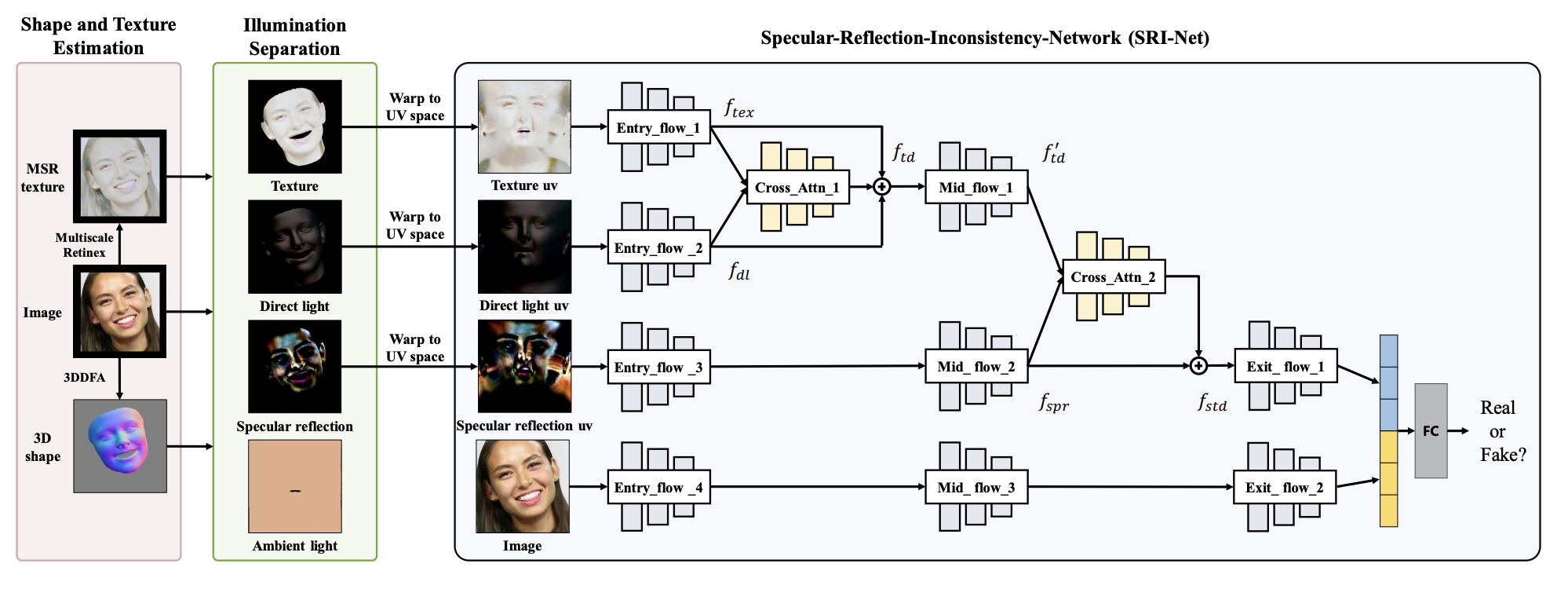
Exploring Specular Reflection Inconsistency for Generalizable Face Forgery Detection
Hongyan Fei, Zexi Jia*, Chuanwei Huang, Jinchao Zhang, Jie Zhou
International Conference on Learning Representations (ICLR) 2026
We exploit physical inconsistencies in facial specular highlights under the Phong model, with fast texture estimation and an SRI-Net architecture, to detect forgeries that generalize across classical and diffusion-based deepfakes.
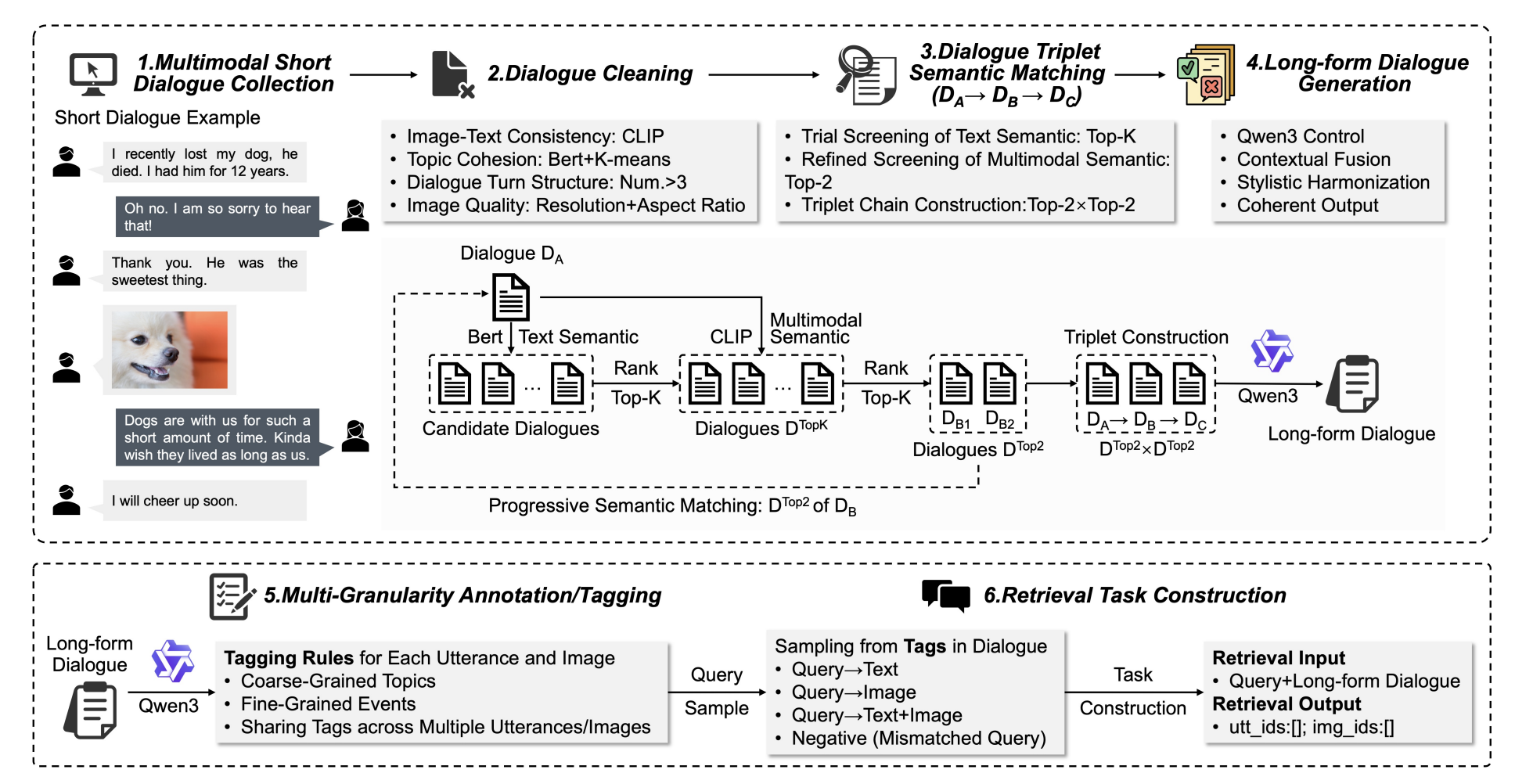
F2RVLM: Boosting Fine-grained Fragment Retrieval for Multi-Modal Long-form Dialogue with Vision Language Model
Hanbo Bi, Zhiqiang Yuan, Zexi Jia, Jiapei Zhang, Chongyang Li, Peixiang Luo, Ying Deng, Xiaoyue Duan, Jinchao Zhang*
AAAI Conference on Artificial Intelligence (AAAI) 2026
We introduce fine-grained fragment retrieval in long multi-modal dialogues and train a generative VLM with supervised fine-tuning plus GRPO-style reinforcement learning and curriculum sampling, outperforming strong VLMs on in-domain and real-world chats.

CoDA: Convergent Diffusion Approximation for Generating Realistic Faces
Zexi Jia, Zhiqiang Yuan, Xiaoyue Duan, Jinchao Zhang*, Jie Zhou, Anil K. Jain
IEEE Transactions on Pattern Analysis and Machine Intelligence (TPAMI) 2026 Journal
We propose CoDA, a convergent diffusion approximation framework for generating highly realistic face images with improved training stability and generation quality. By establishing a convergent approximation to the true data distribution through diffusion models, CoDA achieves superior fidelity while maintaining diversity, advancing the state of the art in face generation.
2025
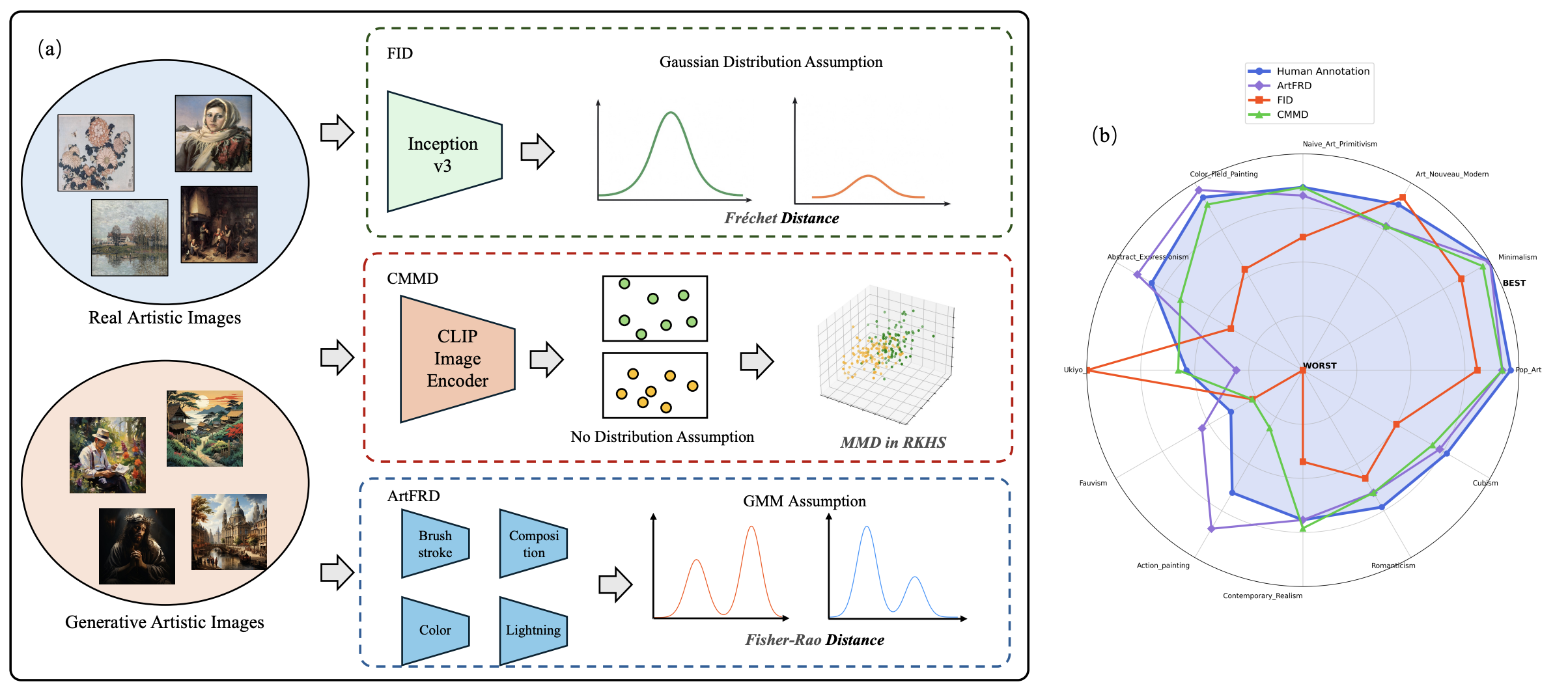
ArtFRD: A Fisher-Rao Mixture Metric for Generative Model Aesthetic Evaluation
Chuanwei Huang, Zexi Jia*, Hongyan Fei, Yeshuang Zhu, Zhiqiang Yuan, Jinchao Zhang, Jie Zhou
Proceedings of the 33rd ACM International Conference on Multimedia (ACM MM) 2025 Oral
We introduce ArtFRD, a Fisher–Rao mixture metric for evaluating the aesthetic quality of images generated by generative models. By modeling aesthetic feature distributions on an information-geometric manifold and measuring Fisher–Rao distances between generated and real images, ArtFRD jointly captures both visual quality and diversity. Experiments on multiple generative models show that ArtFRD provides a more faithful and stable approximation to human aesthetic judgments than traditional distributional metrics.
WalkVLM: Aid Visually Impaired People Walking by Vision Language Model
Zhiqiang Yuan, Ting Zhang, Yeshuang Zhu, Ying Deng, Jiapei Zhang, Zexi Jia, Xiaoyue Duan, Jinchao Zhang, Jie Zhou*
IEEE/CVF International Conference on Computer Vision (ICCV) 2025 Poster
We present WalkVLM, a vision-language model designed to assist visually impaired people during walking. The system integrates real-time visual perception with language understanding to provide natural, context-aware navigation guidance, obstacle detection, and environmental descriptions.
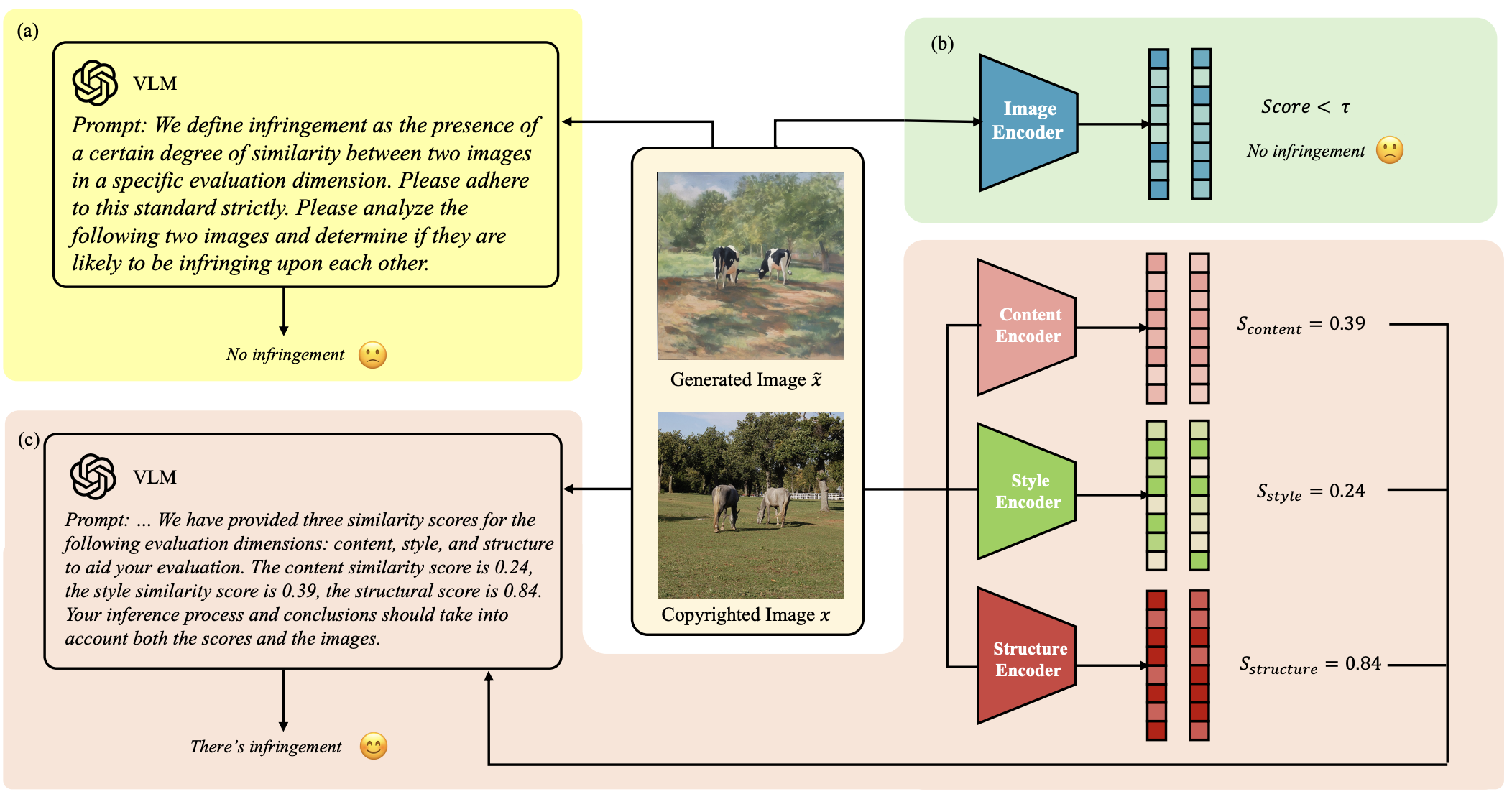
MCID: Multi-aspect Copyright Infringement Detection for Generated Images
Chuanwei Huang, Zexi Jia*, Hongyan Fei, Yeshuang Zhu, Zhiqiang Yuan, Ying Deng, Jiapei Zhang, Xiaoyue Duan, Jinchao Zhang*, Jie Zhou
IEEE/CVF International Conference on Computer Vision (ICCV) 2025 Poster
We introduce MCID, a new task for multi-aspect copyright infringement detection in AI-generated images that jointly considers content, style, structure, and intellectual property infringement. To support this task, we construct the Large-scale Copyright Dataset (LSCD) and propose HIDM, a hybrid infringement detection model that combines feature-based similarity analysis with vision-language models. HIDM provides interpretable judgments and achieves significantly better performance than existing methods across all infringement types, especially on challenging structural cases.
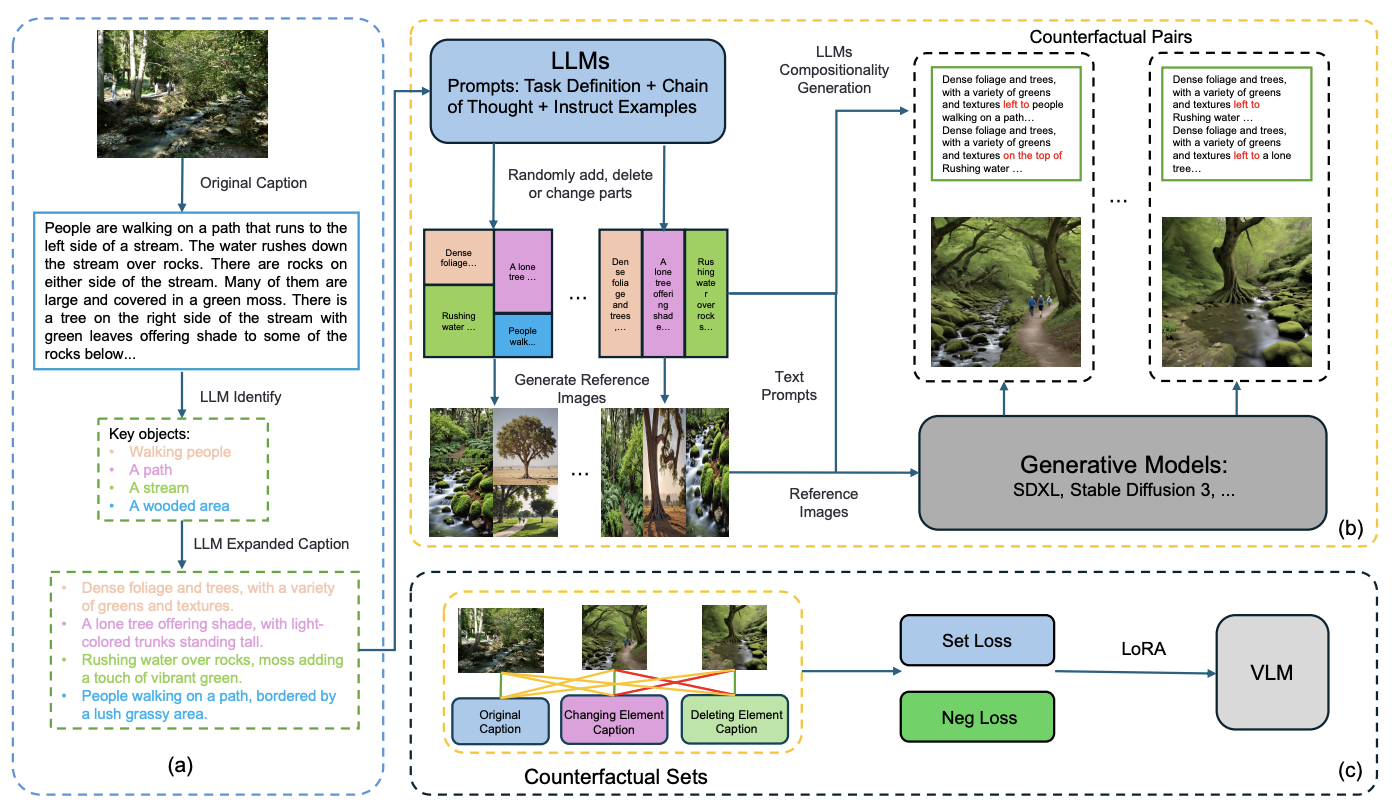
A Visual Leap in CLIP Compositionality Reasoning through Generation of Counterfactual Sets
Zexi Jia, Chuanwei Huang, Hongyan Fei, Yeshuang Zhu, Zhiqiang Yuan, Ying Deng, Jiapei Zhang, Jinchao Zhang*, Jie Zhou
IEEE/CVF International Conference on Computer Vision (ICCV) 2025 Poster
We propose a block-based diffusion framework that automatically generates high-quality counterfactual image–text sets to improve CLIP-style compositional reasoning. Large language models are used to parse entities and spatial relationships, and then guide a “puzzle piece” generation process to compose diverse counterfactual images with precisely controlled variations. Together with a new set-wise loss that separates intra-set and inter-set pairs, our method significantly boosts visual reasoning performance and achieves state-of-the-art results on multiple benchmarks while using substantially less training data.

From Imitation to Innovation: The Emergence of AI's Unique Artistic Styles and the Challenge of Copyright Protection
Zexi Jia, Chuanwei Huang, Yeshuang Zhu, Hongyan Fei, Ying Deng, Zhiqiang Yuan, Jiapei Zhang, Jinchao Zhang*, Jie Zhou
IEEE/CVF International Conference on Computer Vision (ICCV) 2025 Poster
We study when AI-generated artworks can be recognized as having their own protectable artistic styles and how to judge potential copyright infringement. Building on legal precedents, we formulate three key criteria—stylistic consistency, creative uniqueness, and expressive accuracy—and propose ArtBulb, an interpretable framework that combines a style description-based multimodal clustering method with multimodal large language models. We also construct AICD, the first benchmark dataset for AI art copyright judgment, and show that ArtBulb outperforms existing methods in both quantitative and qualitative evaluations.
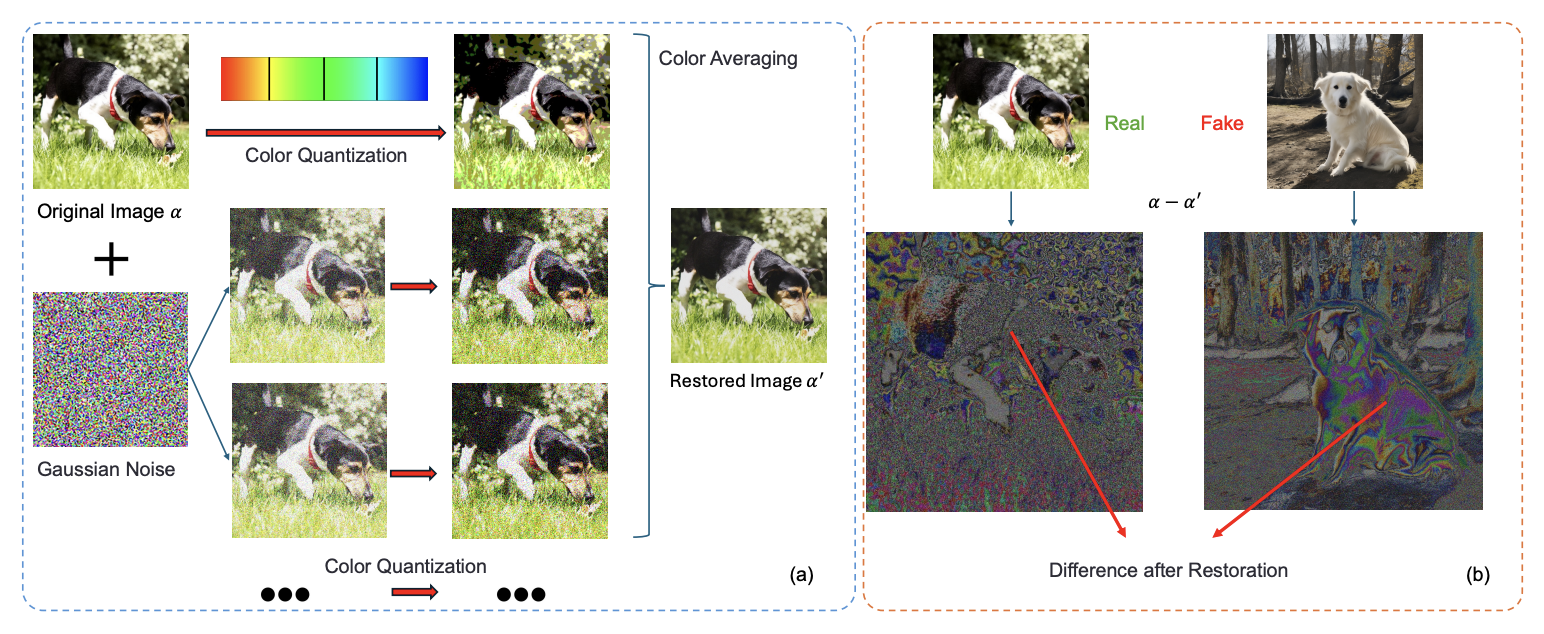
Secret Lies in Color: Enhancing AI-Generated Images Detection with Color Distribution Analysis
Zexi Jia, Chuanwei Huang, Yeshuang Zhu, Hongyan Fei, Xiaoyue Duan, Zhiqiang Yuan, Ying Deng, Jiapei Zhang, Jinchao Zhang*, Jie Zhou
IEEE/CVF Conference on Computer Vision and Pattern Recognition (CVPR) 2025 Poster
We propose a color-distribution-based framework for detecting AI-generated images. By analyzing the differences before and after color quantization and restoration, we extract lightweight color features and combine them with image features to build a 1.4M-parameter detector that achieves state-of-the-art performance on multiple benchmarks, including our new and challenging FakeART dataset.
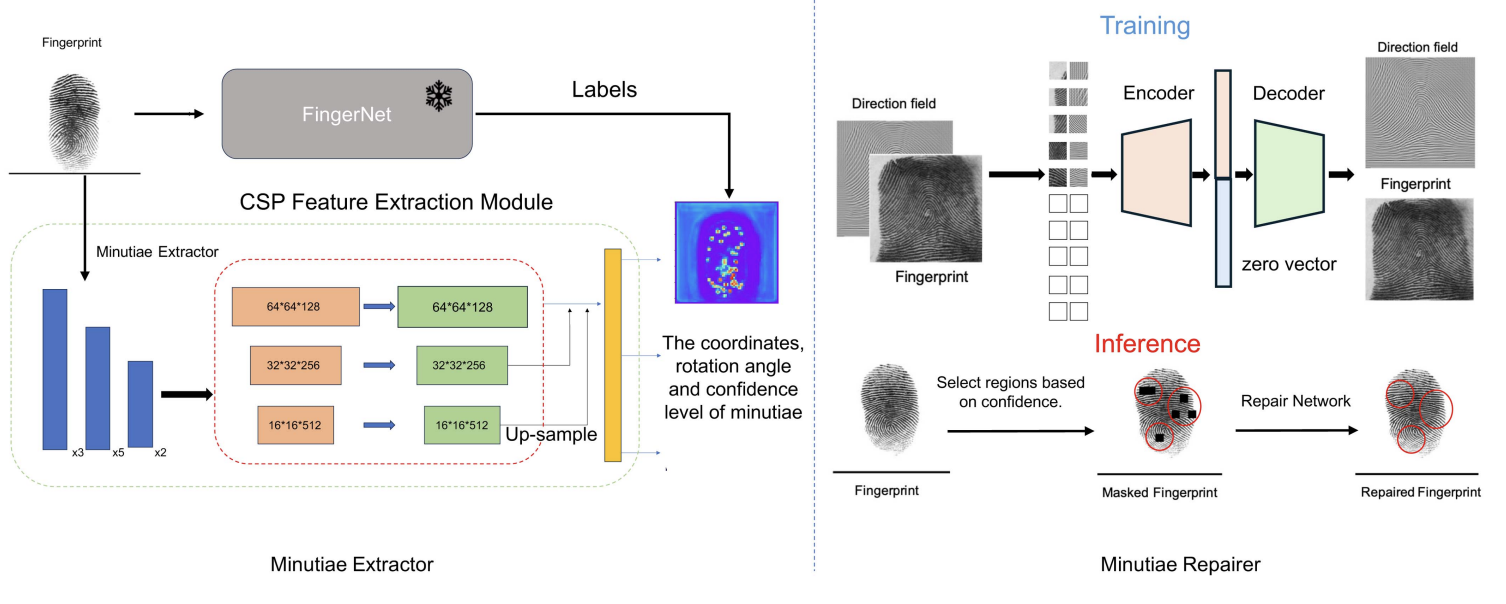
Automated Framework for Extracting and Restoring Minutiae From Low-Quality Fingerprints
IEEE Signal Processing Letters (SPL) 2025 Journal
We propose an automated framework for extracting and restoring fingerprint minutiae from low-quality images. By jointly enhancing degraded fingerprints and recovering missing or unreliable minutiae, the framework improves the robustness of minutiae extraction in challenging conditions and boosts subsequent fingerprint recognition performance on low-quality and noisy fingerprint datasets.
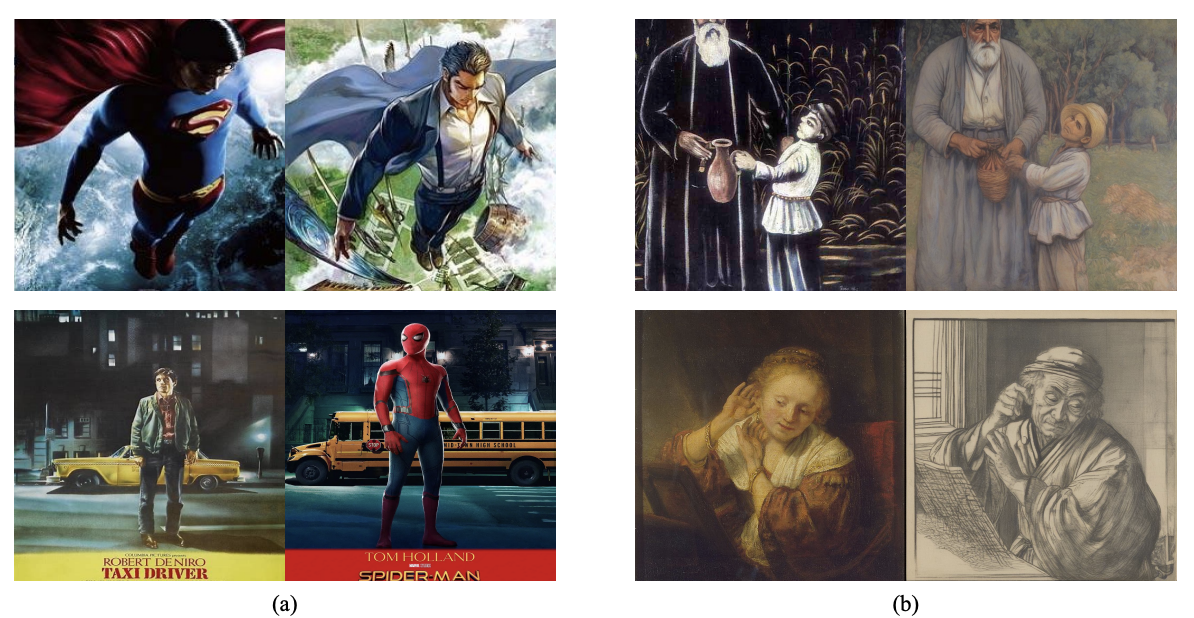
Semantic to Structure: Learning Structural Representations for Infringement Detection
Chuanwei Huang, Zexi Jia*, Hongyan Fei, Yeshuang Zhu, Zhiqiang Yuan, Ying Deng, Jiapei Zhang, Jinchao Zhang*, Jie Zhou
IEEE International Conference on Acoustics, Speech, and Signal Processing (ICASSP) 2025 Oral
We study copyright infringement detection from a structural perspective and propose a framework that learns structure-aware representations to distinguish subtle yet significant structural similarities between AI-generated and reference images. Starting from semantic features, we progressively refine them into structural representations that emphasize layout and geometry, and design a structure-guided matching module for infringement judgment. Experiments on multiple benchmarks show that our method achieves superior performance, especially in hard structural infringement cases.
2024
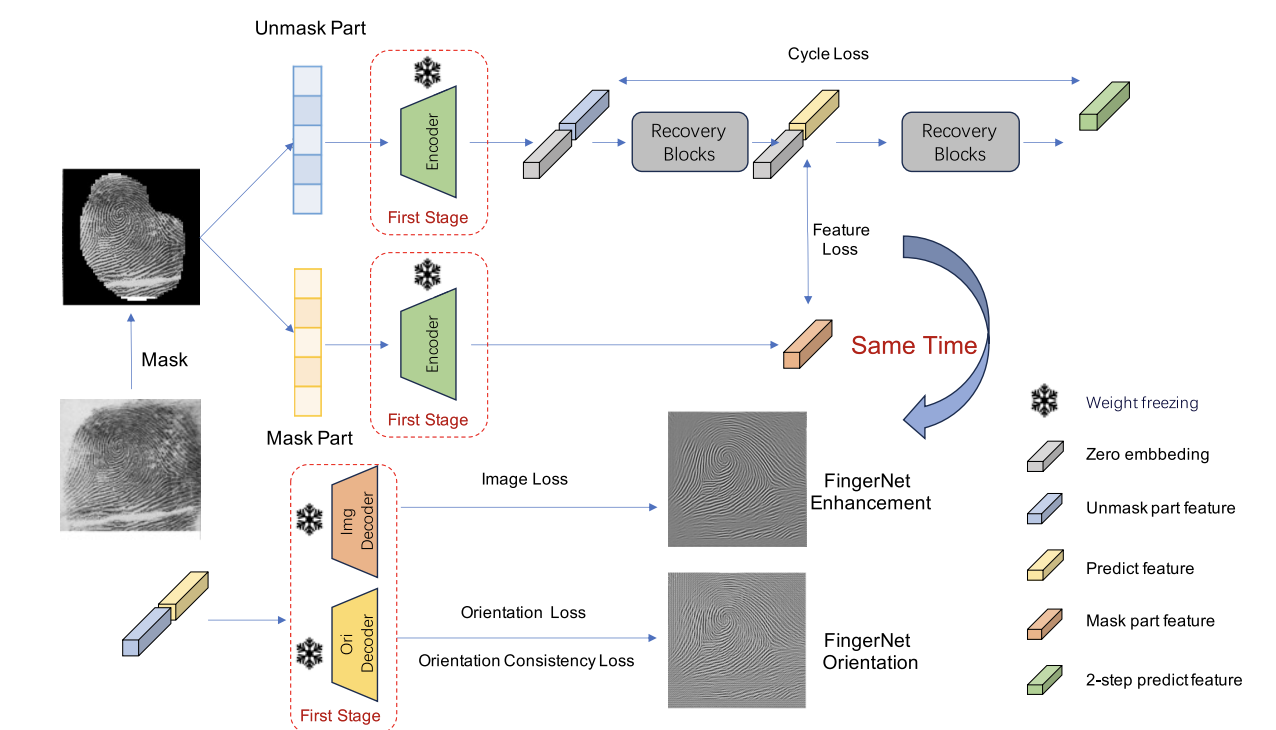
Finger Recovery Transformer: Toward Better Incomplete Fingerprint Identification
Zexi Jia, Chuanwei Huang, Zheng Wang, Hongyan Fei, Song Wu, Jufu Feng*
IEEE Transactions on Information Forensics and Security (TIFS) 2024 Journal
We propose Finger Recovery Transformer (FingerRT), a transformer-based framework specifically designed for incomplete fingerprint identification. FingerRT combines fingerprint enhancement networks with a two-stage architecture—denoising/enhancement and recovery—and incorporates key domain features such as orientation fields and minutiae as supervision signals. By imposing multi-level constraints on features, images, and generation stages, FingerRT effectively removes ambient noise, restores missing ridge structures, and significantly improves recognition accuracy on rolled, snapped, and latent fingerprint datasets.
Fingerprint Presentation Attack Detection by Region Decomposition
Hongyan Fei, Chuanwei Huang, Song Wu, Zheng Wang, Zexi Jia, Jufu Feng*
IEEE Transactions on Information Forensics and Security (TIFS) 2024 Journal
We propose a region decomposition approach for fingerprint presentation attack detection that analyzes local regions independently to capture fine-grained artifacts introduced by different spoofing materials. The method improves generalization across unseen attack types and materials.
2023
FingerSTR: A Robust Fingerprint Segmentation and Texture Restoration Framework
Zexi Jia, Chuanwei Huang, Jufu Feng*
IEEE International Joint Conference on Biometrics (IJCB) 2023 Poster
We propose FingerSTR, a framework for joint fingerprint segmentation and texture restoration that handles severely degraded fingerprints. The method combines a segmentation network with a texture restoration module to simultaneously identify fingerprint regions and recover ridge details.
Fingerprint Presentation Attack Detection with Supervised Contrastive Learning
Chuanwei Huang, Hongyan Fei, Zexi Jia, Song Wu, Jufu Feng*
IEEE International Joint Conference on Biometrics (IJCB) 2023 Poster
We apply supervised contrastive learning to fingerprint presentation attack detection, learning discriminative representations that better separate live and spoof samples. The approach improves detection accuracy and cross-material generalization.
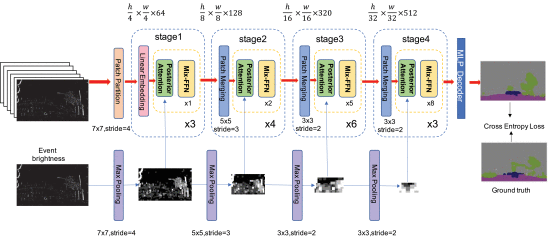
Event-Based Semantic Segmentation With Posterior Attention
Zexi Jia, Kaichao You, Weihua He, Yang Tian, Yongxiang Feng, Yaoyuan Wang, Xu Jia, Yihang Lou, Jingyi Zhang, Guoqi Li*, Ziyang Zhang
IEEE Transactions on Image Processing (TIP) 2023 Journal
We address semantic segmentation using only event-based cameras, which operate in microseconds and remain robust under challenging lighting. To better exploit event information, we propose a posterior attention module that adjusts standard attention with priors derived from events and can be plugged into existing segmentation backbones. Integrated with SegFormer, the resulting EvSegFormer achieves state-of-the-art performance on MVSEC and DDD-17 for event-based semantic segmentation, demonstrating both accuracy and efficiency.
2022
Minutiae-awaredly Learning Fingerprint Representation for Fingerprint Indexing
IEEE International Joint Conference on Biometrics (IJCB) 2022 Oral
We propose a minutiae-aware learning approach for fingerprint indexing that learns compact fingerprint representations by explicitly encoding minutiae information. The method achieves efficient large-scale fingerprint retrieval with high accuracy.
A Semantic Segmentation Method for Overlapping Fingerprints
Zheng Wang, Zexi Jia, Jufu Feng*
IEEE Signal Processing Letters (SPL) 2022 Journal
We propose a semantic segmentation approach for separating overlapping fingerprints into individual components. The method leverages deep learning to assign each pixel to its corresponding fingerprint, enabling downstream recognition on previously inseparable overlapping prints.